
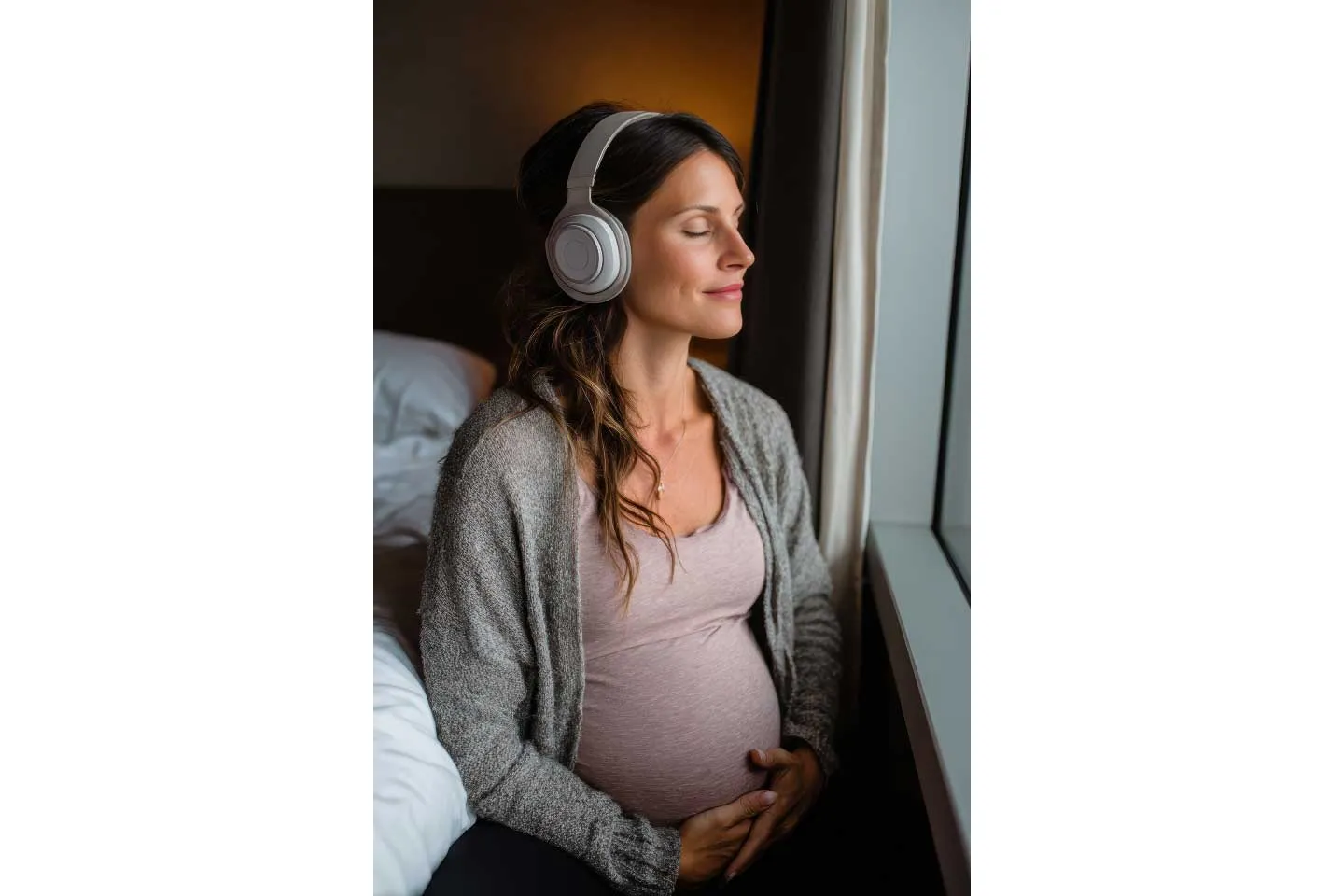
hypnobirthing is a fascinating concept and is becoming increasingly popular. Chantel Kismet is a Birth and Postpartum Doula, a Fertility Coach, and hypnobirthing Educator. She lets us know all the ins and outs of the process and answers some of the most common questions from mums interested in what’s behind it.
Before Chantel dives into talking more about hypnobirthing, there are 2 things she is keen to bring to everyone’s attention.
- It starts with ourselves. That means as you go down this journey into Parenthood, whether it's pregnancy, birth or becoming a parent, it all begins with us. Our self-awareness, our mental strength, and how we deal with situations thrown at us, because as a mum, you see that parenthood comes with lots of challenges, and the only constant is ourselves.
- Reframing the way we look at the birth process and the way we look at parenting. It’s about changing our perspective, and hypnobirthing comes in very nicely because, firstly, there are different techniques and methods out there to help you work through your labour and birth, and hypnobirthing is one of them.
So, What is hypnobirthing?
Is this a skill or a technique that actually alters the state of your mind? A lot of people have the misconception that it is a kind of hypnosis where somebody takes a pendulum or something and dangles it in front of you and goes like ‘listen to me, I will take everything from you, etc.
Well, that’s not the case,e and hypnobirthing is a technique ofself-hypnosis. To actually be able to go under the state of self-hypnosis, you have to be a consenting person. And throughout the entire process, you remain fully conscious and aware. All of us have 5 brainwave patterns with 5 brainwave frequencies, and self-hypnosis takes your brain and body into a very relaxed state, into the Delta brainwave frequency, where your body goes into a deep state of relaxation.
Ultimately, that is what hypnobirthing is all about. This deep relaxation actually increases uterine contractions to massage your baby down and release endorphins. That acts like Panadol when you have a headache.
How Long Does the Process of Preparing for a Hypnobirth Take?
Most people are short on time and may be concerned about how much time they need to invest to ensure the hypnobirthing process is effective. According to a university in London, it takes an average of 66 days for neurons to rewire and form a new habit, and for that habit to become automatic. The key is consistency, keeping the practice regular, and, if possible, daily. Usually, set aside about 20-30 minutes a day for self-meditation, breathing exercises, and visualizations.
Will You Remember the Birth?
You are completely conscious during the birth. Although you are in a state of self-hypnosis, you are aware of what is going on and your surroundings, so you will not forget. In fact, you will actually feel quite the opposite and remember a lot of it. When you look at the woman, they are so powerful, and when they are birthing their baby into the world, they are so focused with their eyes closed and relaxing. You would believe they are in another realm with their minds, but after birth, when you speak to them, they will remember things the nurses did and who held their hand, etc.
How Does the Mum Behave When Under Self-Hypnosis?
Every woman has a different and unique response. Some mums go into a highly relaxed, calm state, and all you hear is breathing sounds; some mums are more vocal. In fact, sound can further relax the body, especially the cervix.
What Happens if Medical Intervention Is Required?
The self-hypnosis and deep relaxation involved in hypnobirthing not only apply to the birthing process; as a parent, these techniques can help you reduce adrenaline in your body, which is often in a highly stressed state, and help you stay calm and composed to face whatever situations you encounter. If medical intervention is required, you will feel better equipped to remain calm and composed and to focus on helping yourself and your partner handle any emergency. It is also helpful to the hypnobirthing process being more successful if you accept beforehand that it may not follow completely in line with your wishes and that medical intervention may be required. Have conversations with your care provider to help you understand what to expect. So even if you're thrown into a situation where you have to make this decision, you know why and aren't doing it unthinkingly.
Being informed and understanding the options and scenarios. Then you add this hypnobirthing tool to help you stay calm and composed in stressful situations. It kind of goes together.
A Biggie Question. Does It Make the Birth Pain-Free?
Using hypnobirthing techniques cannot guarantee a 100% pain-free birth, but let's return to what it’s actually doing to your body physiologically, and you will understand why it can, in fact, be pain-free. When you enter a deep state of relaxation and allow your body to breathe deeply and slowly, your blood pressure and heart rate decrease, and you secrete oxytocin and endorphins. When these physiological changes occur, your body is in a very relaxed state, tenses up less, and you will feel less discomfort. From a physio perspective, we want the pelvic floor to be completely comfortable during the birthing process, not tensed, so you don't have to push through a tight, tense pelvic floor, which can lead to more pain and tears.
Is It Advised To Get Our Partners Involved?
Yes, for sure. You made this baby together and will journey through together. A lot of the time, when you have partners who go through the preparation process and help them connect better with each other before the baby arrives, you often find that once the baby’s here, they’re more loving and more supportive towards their partner, and in labour itself. So yes, having your partner be part of it will help prepare you for the birth, support you through it, and strengthen your connection.
Chantel offers Prenatal Classes in Singapore and is a Doula and hypnobirthing educator. To find out more information and to get in touch with Chantel, visit her website www.bloomingbirths.com
Schedule Your Visit
Don’t wait to feel better. Book your consultation with Physio Therapy Singapore Collective today and let us help you move freely and live pain-free.


Mon–Fri: 7 a.m.– 9 p.m.
Sat & Sun: 8 a.m.– 8 p.m.

We offer expert physiotherapy, rehabilitation, and wellness services across Singapore.



2026 © Physiotherapy Singapore Collective. All rights reserved. | Privacy Policy | Digital Marketing by Remedo
- Aljunied |
- Ang Mo Kio |
- Balestier |
- Bartley |
- Bedok |
- Bugis |
- Bukit Batok |
- Bukit Timah |
- Buona Vista |
- Chinatown |
- Choa Chu Kang |
- Clementi |
- East Coast |
- Geylang |
- Hougang |
- Jalan Kayu |
- Jurong |
- Kallang |
- Kembangan |
- Macpherson |
- Mandai |
- Marina Bay |
- Marine Parade |
- Novena |
- Orchard Road |
- Pasir Panjang |
- Pasir Ris |
- Paya Lebar |
- Potong Pasir |
- Punggol |
- Queenstown |
- Raffles Place |
- Seletar |
- Sentosa |
- Serangoon |
- Tai Seng |
- Tampines |
- Tanjong Pagar |
- Telok Blangah |
- Tiong Bahru |
- Toa Payoh |
- Woodlands |
- Yishun
- Aljunied |
- Ang Mo Kio |
- Balestier |
- Bartley |
- Bedok |
- Bugis |
- Bukit Batok |
- Bukit Timah |
- Buona Vista |
- Chinatown |
- Choa Chu Kang |
- Clementi |
- East Coast |
- Geylang |
- Hougang |
- Jalan Kayu |
- Jurong |
- Kallang |
- Kembangan |
- Macpherson |
- Mandai |
- Marina Bay |
- Marine Parade |
- Novena |
- Orchard Road |
- Pasir Panjang |
- Pasir Ris |
- Paya Lebar |
- Potong Pasir |
- Punggol |
- Queenstown |
- Raffles Place |
- Seletar |
- Sentosa |
- Serangoon |
- Tai Seng |
- Tampines |
- Tanjong Pagar |
- Telok Blangah |
- Tiong Bahru |
- Toa Payoh |
- Woodlands |
- Yishun