
Five Fast Facts About Taping After Injury
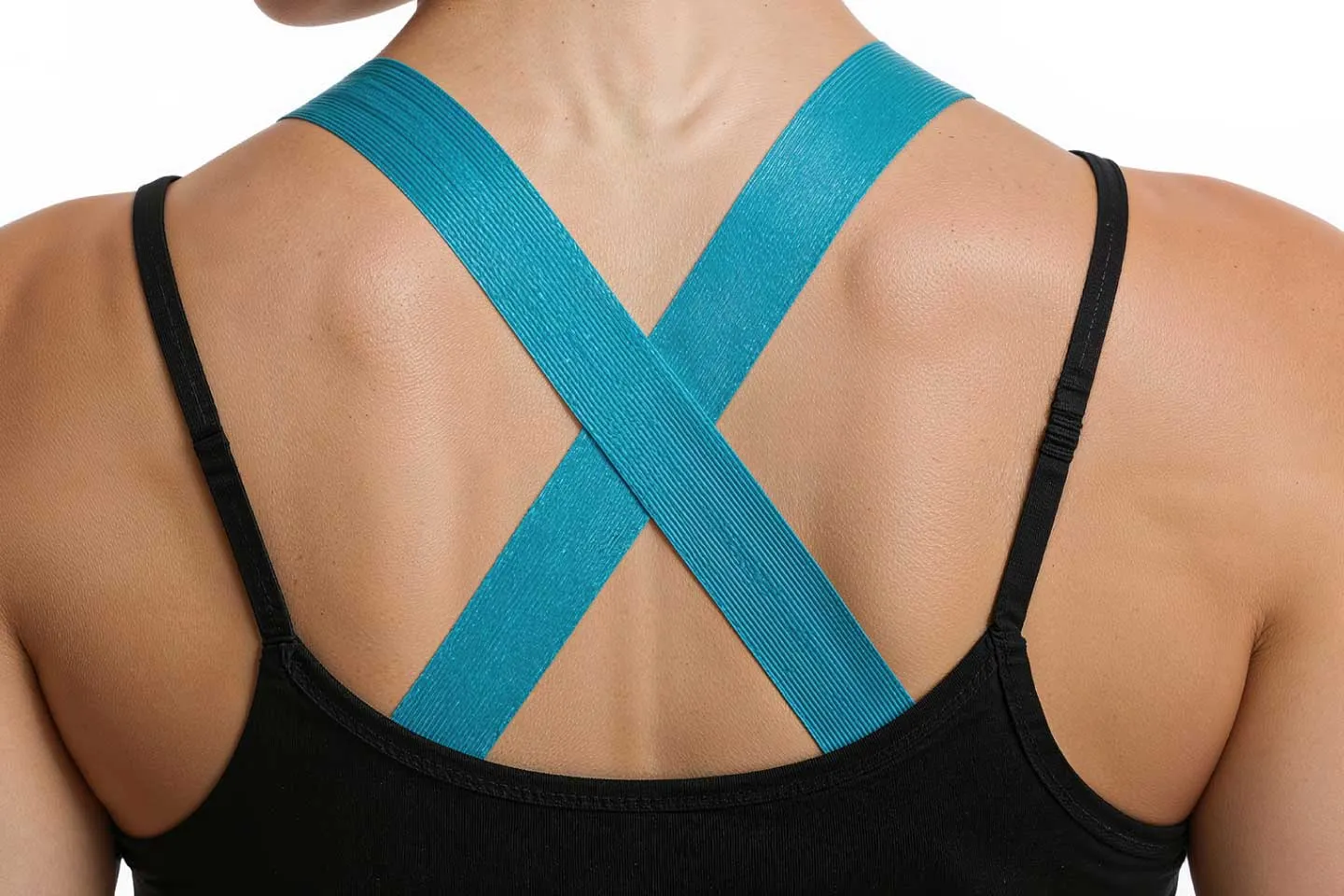
Many injuries around the body can benefit from taping techniques. It is a technique loved by some therapists but loathed by others. The reason for this split is that it is all too often the go-to treatment for every condition, and sometimes the only treatment offered to the patient. When we review the research base and combine it with expert clinical opinion, it is clear that there is little justification for using taping techniques in isolation for any condition. The reason is that the tape is often used to facilitate regular movements or avoid painful ones as part of a recovery plan. Still, it does not help the injury heal faster and cannot entirely reduce the risk of re-injury.
Here Are Our Top Five Fast Facts: Is Taping the Right Choice After an Injury?
1) Am I Allergic to Tape?
There is nothing more annoying and sore than a skin reaction to tape. If you have previously had a reaction to sticky plasters when you’ve applied them, avoid the use of tape. If you plan to exercise in hot or sweaty conditions, avoid using excessive tape, as it can increase skin irritation. If you are unsure, ask for a small sample of the tape to use and do a 24-hour skin patch test first, applying it to your wrist and observing it every hour. When tape is applied, check for redness around the tape or itchiness under the edges.
If this occurs, remove it and discuss with your therapist immediately.
2) What Type of Tape: Kinesio or McConnell?
There are many different types of tape on the market today. Hundreds of makers have developed their own versions of essentially two distinct ideas. The first was along the lines of McConnell taping, where firm, inflexible tape is applied to the body. This tape has little stretch. The other form is Kinesio tape. This tape has much more flexibility and quite a bit of stretch. Advocates of the two types will tell you there are many and varied effects to be achieved with both. Currently, the literature indicates that McConnell taping can provide some restriction to specific movements for a short period when applied. For example, a rugby player may benefit from ankle taping during a game to prevent over-strain of the ankle ligaments as they return to exercise. Kinesio tape has not been shown to restrict movement. It helps move the different layers within the body. For example, after an injury and the development of scar tissue or swelling, the various layers struggle to move efficiently over one another. Kinesio tape is suggested to aid this movement by lifting the skin slightly, allowing the layers below to glide. This has not yet been demonstrated in the literature. Your therapist will help you decide which technique may be helpful to you.
3) What Treatment Should It Be Combined With for Optimum Recovery?
We briefly touched on the suggestion that taping an injury in isolation makes little sense. This potentially only treats a small part of the bigger picture. Most of the literature on taping techniques indicates that it is an effective adjunct to other active treatments that help address the underlying problems limiting recovery. A good example of this is ankle sprains. A widespread injury for which taping techniques have historically been used frequently. Best-practice guidelines and a review of the literature have shown that combining taping techniques with balance and control exercises can be effective in reducing pain from ankle sprains and in shortening recovery time. Why this is the case is still up for discussion. One possible explanation is that taping can help to activate the right muscles around the ankle during the exercises. This might not be achieved easily without tape if the patient is in significant pain and their muscles are not working optimally.
4) Do You Really Want to ‘Stiffen Up’ a Joint After Injury?
One of the original reasons given to patients for using tape was that it helps ‘stiffen up’ and protect the joint after injury. This was suggested to aid recovery by limiting movements that might cause harm and re-injury. We now know that fundamentally, this theory is flawed. There is enough evidence to confidently say that any tape is incapable of keeping a joint completely still when applied, and certainly not after 10-15 minutes of activity with it on. It is also worth considering that ‘stiffening up’ the joint may help with recovery. This may inhibit regular muscle activity and control around the joint, make muscles ‘lazy’ in their actions, and leave the joint vulnerable to further injury. This is still under review, but the primary goal is to help patients resume using their muscles to support and stabilize a joint.
5) Taping: Functional and Fashionable?
Tape is one of those treatments that will be fashionable even if it hasn’t been proven to be all that useful. When you watch a premier football team come out onto the pitch and see one or two players covered in brightly coloured tape that has helped them return to full fitness, you wonder about it. When we see it peeking over the tops of the socks of Premier League netballers, we wonder if it would help us get back to the game we love. We are influenced by what we see around us, and tape is a visible and accessible option for most of us. Think carefully about what you are trying to achieve. Get your therapist to explain clearly why it may or may not benefit you as an individual, and always make sure it is not the only thing you are doing to aid your recovery. The simple fact exists that nothing worth having is that easy to obtain with a bit of sticky tape.
Leanne Plenge
Bristol Manager
Specialist MSK Physiotherapist
Schedule Your Visit
Don’t wait to feel better. Book your consultation with Physio Therapy Singapore Collective today and let us help you move freely and live pain-free.


Mon–Fri: 7 a.m.– 9 p.m.
Sat & Sun: 8 a.m.– 8 p.m.


We offer expert physiotherapy, rehabilitation, and wellness services across Singapore.



2026 © Physiotherapy Singapore Collective. All rights reserved. | Privacy Policy | Digital Marketing by Remedo
- Aljunied |
- Ang Mo Kio |
- Balestier |
- Bartley |
- Bedok |
- Bugis |
- Bukit Batok |
- Bukit Timah |
- Buona Vista |
- Chinatown |
- Choa Chu Kang |
- Clementi |
- East Coast |
- Geylang |
- Hougang |
- Jalan Kayu |
- Jurong |
- Kallang |
- Kembangan |
- Macpherson |
- Mandai |
- Marina Bay |
- Marine Parade |
- Novena |
- Orchard Road |
- Pasir Panjang |
- Pasir Ris |
- Paya Lebar |
- Potong Pasir |
- Punggol |
- Queenstown |
- Raffles Place |
- Seletar |
- Sentosa |
- Serangoon |
- Tai Seng |
- Tampines |
- Tanjong Pagar |
- Telok Blangah |
- Tiong Bahru |
- Toa Payoh |
- Woodlands |
- Yishun
- Aljunied |
- Ang Mo Kio |
- Balestier |
- Bartley |
- Bedok |
- Bugis |
- Bukit Batok |
- Bukit Timah |
- Buona Vista |
- Chinatown |
- Choa Chu Kang |
- Clementi |
- East Coast |
- Geylang |
- Hougang |
- Jalan Kayu |
- Jurong |
- Kallang |
- Kembangan |
- Macpherson |
- Mandai |
- Marina Bay |
- Marine Parade |
- Novena |
- Orchard Road |
- Pasir Panjang |
- Pasir Ris |
- Paya Lebar |
- Potong Pasir |
- Punggol |
- Queenstown |
- Raffles Place |
- Seletar |
- Sentosa |
- Serangoon |
- Tai Seng |
- Tampines |
- Tanjong Pagar |
- Telok Blangah |
- Tiong Bahru |
- Toa Payoh |
- Woodlands |
- Yishun