
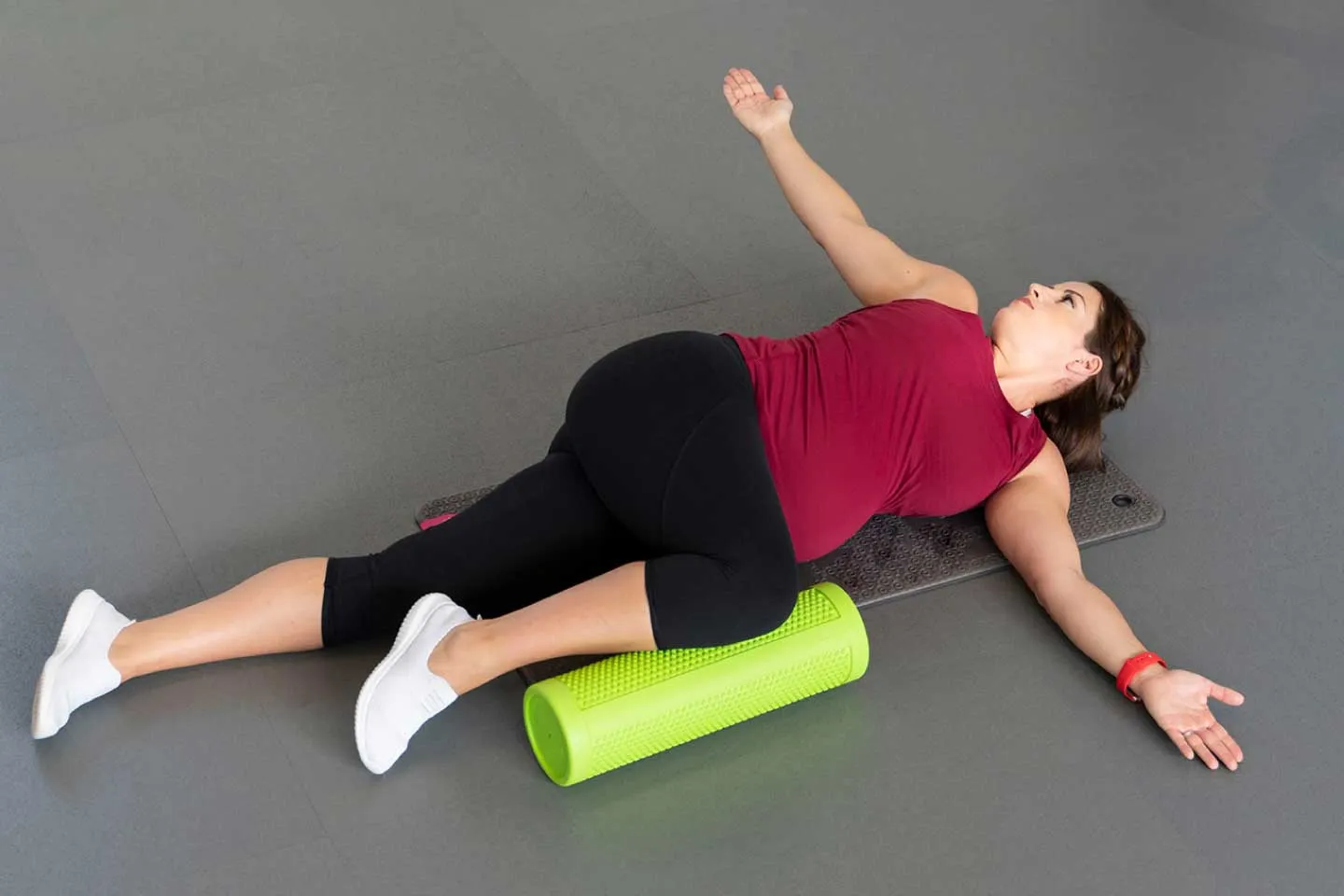
Why is it advisable to continue exercising during pregnancy?
As long as your doctor has given you the OK to exercise during pregnancy, it is definitely worth doing. If undertaking the proper forms of exercise, then the benefits include:
- Keeping the pelvic floor strength up helps prevent ‘uncontrolled weeing’ during and after the pregnancy
- Helps prevent excessive weight gain during pregnancy
- Maintains tone and fitness during pregnancy
- Makes it so much easier to get back into exercise after birth
- Provides a feeling of being revitalized rather than tired
Some Tips on Exercising Safely During Pregnancy
- Keep the weights light – if you are starting to exercise while pregnant, keep dumbbell weights between 0.5 and 2kg. If you are used to lifting heavier weights, it's best to seek supervision from a professional to train safely at the highest weights appropriate for your fitness level.
- Avoid lying flat on your back in the 2nd and 3rd trimesters and put pillows behind your back for support or use an incline bench that allows you to sit at a supported angle – lying flat puts the entire weight of the growing uterus and baby on your back, intestines and vena cava the central vein that carries blood back to the heart from your lower body – lying on the back is not forbidden for very short periods but best to only exercise on the back when under the supervision of a women's health trainer.
- Use gym balls for support.
- Sit on gym balls to move your pelvis by rolling it forward and backwards and in circles.
- Hold onto a support when doing exercises like lunges and squats – it helps prevent falling over now that the centre of gravity has shifted, and can improve posture in the later stages.
- Exercises lying on your side and in the 4-point kneeling position are safe during any trimester of pregnancy.
- Keep hydrated.
- Do not allow yourself to overheat.
- Walking is an excellent, safe form of exercise in pregnancy to help maintain weight, without the risks that can come with other forms of exercise.
- Avoid high-impact jumping exercises unless supervised by a women's health trainer.h
- Try to contract the pelvic floor during exercises. Have a session with an experienced physio if you're not sure you are contracting it correctly.y
- Ensure rest days
- Pilates and yoga are specialized for pregnancy and enjoyable exercise sessions to take part in
- VERY IMPORTANT – avoid ‘CONING’ during any exercise – if you see your tummy dome or form a ridge in any exercise, then stop the exercise – it is too difficult for you and will cause more abdominal separation known as diastasis recti. Read here for more information about this.
Some Flags That You May Be Exercising Too Hard
- You are unable to hold a conversation during exercise – if you are exercising so much that conversation is not possible, it means too much –you should be aiming at easy to moderate exercising.
- If you feel minor muscle soreness after a workout, that's okay, but any pain that lingers or affects the low back, pelvis, or other joints is a sign you have done too much.
- The idea is to feel better after an exercise session rather than feeling exhausted – reduce the intensity next time if you felt exhausted after the last training session.
- If you are getting sick frequently, it may be a sign of overtraining and not taking enough rest. Exercise during pregnancy is not the time to optimise your fitness and strength; it is more about maintaining it.
- Beware of overheat.ing – any of the following symptoms are indications that your internal temperature is too high and the baby may be suffering as a result if the blood is diverting to the skin to try and cool you rather than to the uterus – stop if you feel any of the following:
- faint
- dizzy
- headache
- nausea
- cramps
- excessive sweating
- racing heartbeat
Would It Be Worth Seeing A Trainer?
Exercising during pregnancy can be scary with the worry that you may risk miscarriage, harm the baby or yourself. It is worth seeking the help of a physiotherapist experienced in exercise during pregnancy to put your mind at rest and help you continue exercising, knowing that you and your baby will be safe.
Physio Therapy Singapore physio trainers can see you at your home or at our clinic in Telok Ayer Street. There are packages available for exercising during pregnancy, or they can see you and then set you programmes to do at home that are safe, using our online app, which shows videos of the exercises set by the trainer.
Just drop us an email or WhatsApp if you would like to have your first exercise session during your pregnancy with Bex, Laura, or Katie at Physio Therapy Singapore – all experienced physiotherapists in women's health and pregnancy.
Schedule Your Visit
Don’t wait to feel better. Book your consultation with Physio Therapy Singapore Collective today and let us help you move freely and live pain-free.


Mon–Fri: 7 a.m.– 9 p.m.
Sat & Sun: 8 a.m.– 8 p.m.

We offer expert physiotherapy, rehabilitation, and wellness services across Singapore.



2026 © Physiotherapy Singapore Collective. All rights reserved. | Privacy Policy | Digital Marketing by Remedo
- Aljunied |
- Ang Mo Kio |
- Balestier |
- Bartley |
- Bedok |
- Bugis |
- Bukit Batok |
- Bukit Timah |
- Buona Vista |
- Chinatown |
- Choa Chu Kang |
- Clementi |
- East Coast |
- Geylang |
- Hougang |
- Jalan Kayu |
- Jurong |
- Kallang |
- Kembangan |
- Macpherson |
- Mandai |
- Marina Bay |
- Marine Parade |
- Novena |
- Orchard Road |
- Pasir Panjang |
- Pasir Ris |
- Paya Lebar |
- Potong Pasir |
- Punggol |
- Queenstown |
- Raffles Place |
- Seletar |
- Sentosa |
- Serangoon |
- Tai Seng |
- Tampines |
- Tanjong Pagar |
- Telok Blangah |
- Tiong Bahru |
- Toa Payoh |
- Woodlands |
- Yishun
- Aljunied |
- Ang Mo Kio |
- Balestier |
- Bartley |
- Bedok |
- Bugis |
- Bukit Batok |
- Bukit Timah |
- Buona Vista |
- Chinatown |
- Choa Chu Kang |
- Clementi |
- East Coast |
- Geylang |
- Hougang |
- Jalan Kayu |
- Jurong |
- Kallang |
- Kembangan |
- Macpherson |
- Mandai |
- Marina Bay |
- Marine Parade |
- Novena |
- Orchard Road |
- Pasir Panjang |
- Pasir Ris |
- Paya Lebar |
- Potong Pasir |
- Punggol |
- Queenstown |
- Raffles Place |
- Seletar |
- Sentosa |
- Serangoon |
- Tai Seng |
- Tampines |
- Tanjong Pagar |
- Telok Blangah |
- Tiong Bahru |
- Toa Payoh |
- Woodlands |
- Yishun