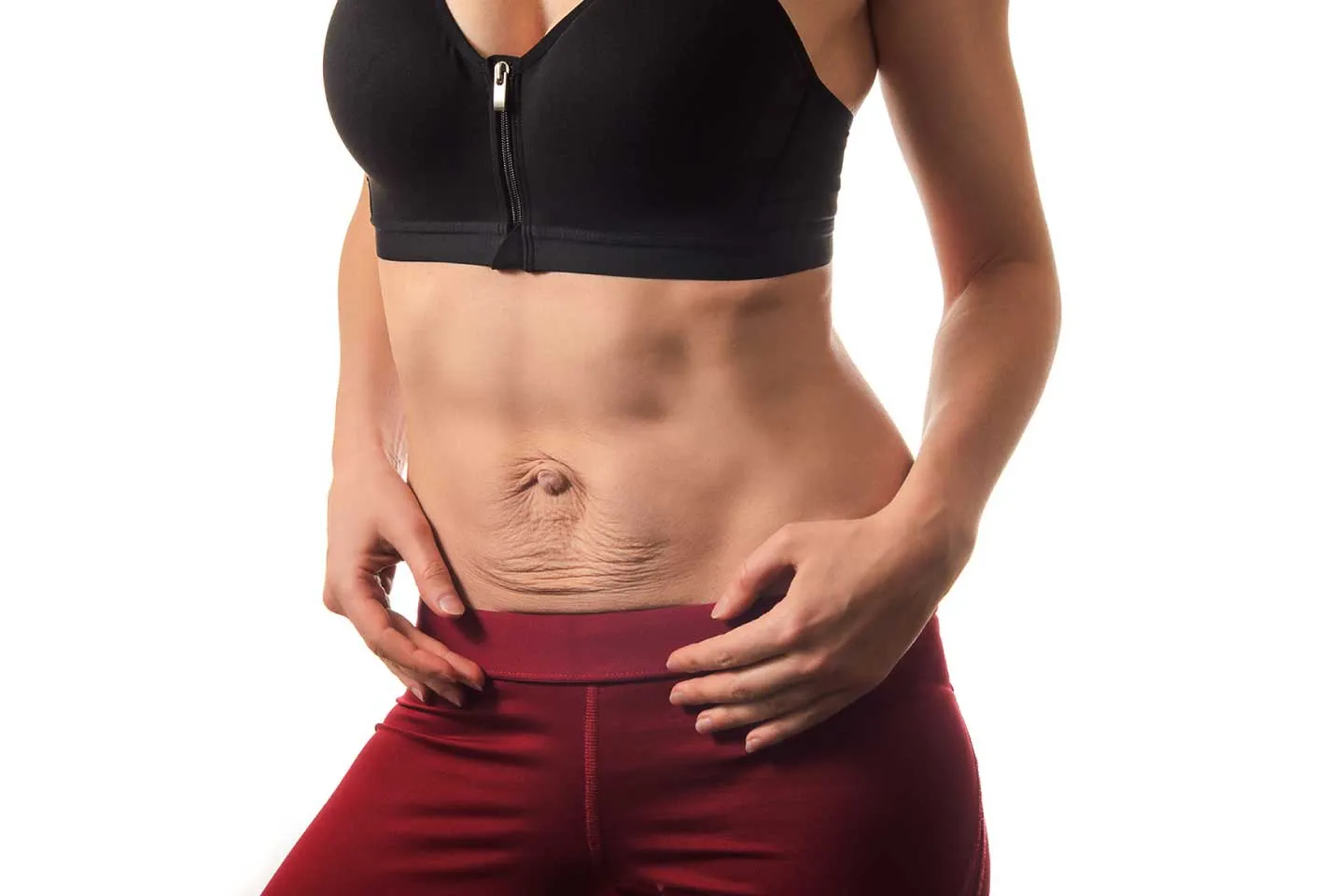
What is Diastasis Recti?
A term that most women have never heard of or have no idea about until after having a baby. Diastasis recti is a widening of the abdominal muscles which happens during pregnancy. After birth, having a mummy tummy pooch, back pain and weeing on sneezing and exercise usually is due to the presence of a Diastasis Recti and poor muscle control.
How Common Is Diastasis Recti?
It is believed that 98-100% of women experience some degree of Diastasis Recti in the end stages of their pregnancy (Diane Lee 2013). A large majority of women with Diastasis Recti will also have pelvic floor muscle dysfunction, and the 2 issues tend to be together. The same core deep abdominal muscles and pelvic floor muscle retraining treat both problems.
The Connective Tissue Linea Alba Facts.
There is connective tissue connecting the 2 abdominals called the linea alba. When a person does abdominal crunches, excessive pressure is placed on the linea alba, which causes the top and bottom of the abdominal muscles to shorten and the middle portion to bulge. To start, small microtears in the connective tissue can occur with repeated strain from abdominal crunches, and this can lead to a muscle separation called Diastasis Recti.
When a woman is pregnant, the above is exacerbated as the hormones in pregnancy make the connective tissue even more lax and vulnerable to strain. Additionally, the growing uterus puts more pressure on the area, along with poor core muscle control and nursing positions, which can lead to a Diastasis Recti during pregnancy.
All the muscles of the abdomen, including the deep transversus abdominals, your rectus abdominis (6-pack), and obliques, all meet at this central point called the linea alba. So when this connective tissue is damaged and made thinner and weaker, it makes your whole body less strong and stable, and the front of your core, being the abdomen, is unsupported and unstable.
The widening of the gap and the weakening of the linea alba connective tissue can occur at different places, as shown in the diagram below.
How Can I Test For A Diastasis Recti?
It is best to have a trained physiotherapist experienced in seeing women after birth to test you and confirm the degree of separation and the severity of the damage to your linea alba connective tissue. If you would like to test yourself, here is how to do it.
Lie on your back on the floor and bend your knees. Then place your 2nd and 3rd fingers together and on the centre of your stomach, pointing down towards your belly button. Press down with your fingertips, then lift your head and neck off the floor, keeping your shoulders down.
The diastasis recti can separate all the way along the 2 rectus muscles or at different points. Therefore, you need to perform the test in 4 different places:
- just below your breast bone (sternum)
- just above the belly button
- just below the belly button
- 2 inches above the pubic bone
Suppose you feel your fingers slipping into a gap in any of the areas above and can feel the 2 rectus abdominis muscles on either side of your fingers; that is a Diastasis Recti. Usually, a gap no wider than 1 or 2 fingers is not a concern. Still, if it is wider, we recommend seeing a physiotherapist trained in Diastasis Recti correction. If you can press firmly into your abdominal cavity, it indicates that the connective tissue has been weakened considerably and that there will be little tension below the fingers. This tension and strength of the connective tissue can be rebuilt with the right exercise programme and training.
What Should I Do If I Have A Diastasis Recti?
It is essential to avoid exercises that cause the abdomen to bulge. Avoid just sitting up after birth; instead, roll onto your side, then into a sitting position, until your Diastasis Recti has healed. Other exercises, such as planks and leg-strengthening exercises like ab bicycles and lowering legs to the floor from a high position, should also be avoided.
Physiotherapists trained in treating Diastasis Recti can start you on a safe programme of specific exercises and gradually progress you to more challenging exercises, which will help the connective tissue heal and regain its tension, improving stability and strength in your body and helping close the Diastasis Recti gap.
Should I Wear A Corset Or Have Binding Done?
The most important thing is to work on increasing your core strength asap, rather than relying on a corset or binding. The muscles described above, once they have gained strength, actually work like your own corset, stabilising and supporting your lower back and whole body. Relying too much on a corset or binding can actually stop the muscles from working. In the very early stages after natural birth, or in the first 6 weeks after C-section, it is okay. Still, we highly recommend kinesiology taping after birth to encourage healing and aid tissue remodelling while you strengthen the correct muscles around the diastasis recti.
How Does Kinesiology Taping Help Correct A Diastasis Recti?
We recommend applying the tape soon after birth, with 3 days on and 1 day off for a total of 6 weeks. This tape has been shown to support the body’s natural healing process and provide stability to the muscles and joints as you rehabilitate and strengthen them through exercises. It does not restrict your movement and is latex-free, so that you can wear it for days at a time.
What Happens in C-Section with Diastasis Recti?
In most cases, the surgeon will actually sew the 2 muscles back together, closing the gap. However, the linea alba connective tissue will still need to heal properly and regain its full tension; therefore, the exercises are just as crucial after C-section as after a natural birth.
How Can I Get Started On Correcting My Diastasis Recti?
Do not leave it too late. It is much harder to correct and takes a lot longer if left more than 8 weeks before starting on a specific rehab programme. Our physiotherapists, trained in this particular method, can make it easier by coming to you at home. We can also apply kinesiology tape at home for you if you are keen to try it. If you have friends who are eager to start as well, we can also offer small-group training at a location of your choice. We can also incorporate toning exercises alongside training to help correct your Diastasis Recti and tone up after birth.
Just drop us a WhatsApp at +65 8088 1876 or an email to hello@ptsc.sg, and we would love to get you back on track.
Schedule Your Visit
Don’t wait to feel better. Book your consultation with Physio Therapy Singapore Collective today and let us help you move freely and live pain-free.


Mon–Fri: 7 a.m.– 9 p.m.
Sat & Sun: 8 a.m.– 8 p.m.

We offer expert physiotherapy, rehabilitation, and wellness services across Singapore.



2026 © Physiotherapy Singapore Collective. All rights reserved. | Privacy Policy | Digital Marketing by Remedo
- Aljunied |
- Ang Mo Kio |
- Balestier |
- Bartley |
- Bedok |
- Bugis |
- Bukit Batok |
- Bukit Timah |
- Buona Vista |
- Chinatown |
- Choa Chu Kang |
- Clementi |
- East Coast |
- Geylang |
- Hougang |
- Jalan Kayu |
- Jurong |
- Kallang |
- Kembangan |
- Macpherson |
- Mandai |
- Marina Bay |
- Marine Parade |
- Novena |
- Orchard Road |
- Pasir Panjang |
- Pasir Ris |
- Paya Lebar |
- Potong Pasir |
- Punggol |
- Queenstown |
- Raffles Place |
- Seletar |
- Sentosa |
- Serangoon |
- Tai Seng |
- Tampines |
- Tanjong Pagar |
- Telok Blangah |
- Tiong Bahru |
- Toa Payoh |
- Woodlands |
- Yishun
- Aljunied |
- Ang Mo Kio |
- Balestier |
- Bartley |
- Bedok |
- Bugis |
- Bukit Batok |
- Bukit Timah |
- Buona Vista |
- Chinatown |
- Choa Chu Kang |
- Clementi |
- East Coast |
- Geylang |
- Hougang |
- Jalan Kayu |
- Jurong |
- Kallang |
- Kembangan |
- Macpherson |
- Mandai |
- Marina Bay |
- Marine Parade |
- Novena |
- Orchard Road |
- Pasir Panjang |
- Pasir Ris |
- Paya Lebar |
- Potong Pasir |
- Punggol |
- Queenstown |
- Raffles Place |
- Seletar |
- Sentosa |
- Serangoon |
- Tai Seng |
- Tampines |
- Tanjong Pagar |
- Telok Blangah |
- Tiong Bahru |
- Toa Payoh |
- Woodlands |
- Yishun