
What is the Pelvic Floor?
The floor of your pelvis is made up of muscles, connective tissue and fascia (non-contractile tissue that coats all muscles, tendons & organs). It is described as a sling of tissue, as it looks a little like a hammock that runs from the pubic bone in the front of the pelvis to the tailbone at the back.
The function of the pelvic floor is to support the internal organs and help us control the passage or retention of urine and faeces, as well as sexual function. There are 3 openings in the pelvic floor in women – the urethra, vagina & anus.
They are the same as any other muscle or connective tissue in the body. They can be damaged and can be rehabilitated. They can be weak or strong. And like all muscles in the body, they have a tone. Tone is the amount of muscle tension at rest. Normal tone should be high enough to resist gravity in standing/sitting, and lying, and low enough to allow a full range of movement.
Many people now recognise that the pelvic floor needs to be strong and functioning well. They are increasingly aware of pelvic floor contraction exercises, also known as Kegel exercises, to help strengthen the pelvic floor.
What is an Overactive Pelvic Floor?
But what happens when the pelvic floor muscles, like any other muscles, spasm and or contract and become weak? When the muscles in the pelvic floor are overworking all the time, it is described as an overactive or hypertonic pelvic floor, where the muscles' resting tone is too high.
What Causes The Pelvic Floor To Become Overactive?
Many reasons can cause the PF to become overactive. It can be one issue alone or several contributing factors, such as:
- Stress and anxiety – this can cause all muscles to tense up
- Overactive bladder – a condition that causes you to go to the toilet frequently
- Overactive abs/core – as the pelvic floor works together with the abdominals, if your abdominals are overactive, the chances are the PF will be too.
- Poor sustained postures – sitting or standing in poor posture for long periods can create tension in the PF, as it may be shortened. Remember to keep moving and changing positions!
- Overdoing PF exercises without the relax component – an essential part of a good pelvic floor contraction, should be the release and relax part.
- Sexual assault or abuse – when dealing with assault or abuse, it is always recommended to seek a combined approach of trauma counsellors and psychologists, as well as a pelvic floor practitioner.
- Chronic low back and or pelvic pain – these conditions can be associated with abdominal dysfunction, and the pelvic floor makes up the floor of the abdomen
- Endometriosis, vulvodynia and vaginismus – pain conditions that can contribute or be solely attributable to a high-tone pelvic floor
- Pelvic surgeries – scarring as well as insufficient rehab can contribute to this
What Are The Symptoms Or Signs Of An Overactive Pelvic Floor?
There can be several different signs and symptoms, but some of the more common ones include:
- Difficulty emptying bladder and or bowel
- Interrupted urine flow
- Constipation
- Pain with bowel movements before or after
- Pain during penetrative intercourse
- Pelvic floor spasms
- Pain when inserting a tampon or during a gynaecological examination.
What Can Be Done To Treat It?
The first focus when treating an overactive pelvic floor should be to relax and ease the overworked muscles. This is, unfortunately, more difficult than activating a muscle. A great deal must be done to address the nervous system, as it is causing the muscle to be permanently “switched on”. Visualisation plays a key role in this. Several cues can be used: imagine a flower bud opening, water rippling outward in a pond, or a jellyfish floating, relaxing, and opening.
If you see a pelvic floor physiotherapist, they may use manual therapy techniques that can be performed internally or externally, as well as different tools to show you what is happening, for example, a real-time ultrasound.
There are things you can try immediately to help resolve some of the symptoms.
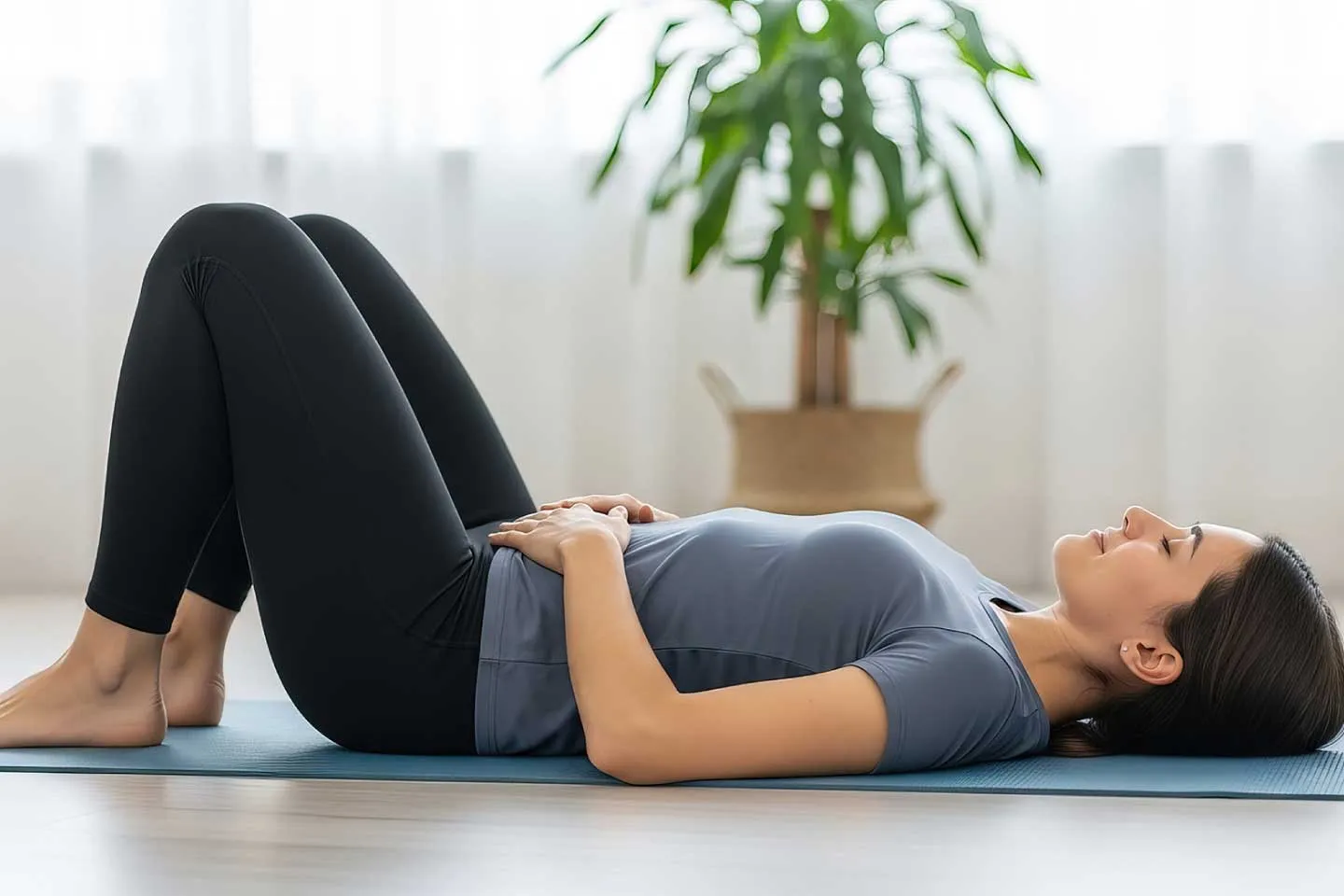
- Belly Breathing/diaphragmatic breathing
- Learn to relax your abdomen rather than constantly sucking it in
- Stretches such as the butterfly stretch, as well as the happy baby
- Strengthening of other muscles appropriately, such as the gluteal muscles (if required)
Once the muscles of the pelvic floor relax properly, they can move through a full range of motion. Once this is achieved, we start the strengthening component of the treatment process. This is an important part, as a tight, overactive pelvic floor is also weak.
As with all muscles, it is so important to treat and train for the specific issue the individual presents with. There is no one-size-fits-all solution; it is best to be assessed and evaluated.
Contact Us Now if you are based in Singapore or London, or Find A Physio in Your Area if you have any concerns about your pelvic floor.
Schedule Your Visit
Don’t wait to feel better. Book your consultation with Physio Therapy Singapore Collective today and let us help you move freely and live pain-free.


Mon–Fri: 7 a.m.– 9 p.m.
Sat & Sun: 8 a.m.– 8 p.m.


We offer expert physiotherapy, rehabilitation, and wellness services across Singapore.



2026 © Physiotherapy Singapore Collective. All rights reserved. | Privacy Policy | Digital Marketing by Remedo
- Aljunied |
- Ang Mo Kio |
- Balestier |
- Bartley |
- Bedok |
- Bugis |
- Bukit Batok |
- Bukit Timah |
- Buona Vista |
- Chinatown |
- Choa Chu Kang |
- Clementi |
- East Coast |
- Geylang |
- Hougang |
- Jalan Kayu |
- Jurong |
- Kallang |
- Kembangan |
- Macpherson |
- Mandai |
- Marina Bay |
- Marine Parade |
- Novena |
- Orchard Road |
- Pasir Panjang |
- Pasir Ris |
- Paya Lebar |
- Potong Pasir |
- Punggol |
- Queenstown |
- Raffles Place |
- Seletar |
- Sentosa |
- Serangoon |
- Tai Seng |
- Tampines |
- Tanjong Pagar |
- Telok Blangah |
- Tiong Bahru |
- Toa Payoh |
- Woodlands |
- Yishun
- Aljunied |
- Ang Mo Kio |
- Balestier |
- Bartley |
- Bedok |
- Bugis |
- Bukit Batok |
- Bukit Timah |
- Buona Vista |
- Chinatown |
- Choa Chu Kang |
- Clementi |
- East Coast |
- Geylang |
- Hougang |
- Jalan Kayu |
- Jurong |
- Kallang |
- Kembangan |
- Macpherson |
- Mandai |
- Marina Bay |
- Marine Parade |
- Novena |
- Orchard Road |
- Pasir Panjang |
- Pasir Ris |
- Paya Lebar |
- Potong Pasir |
- Punggol |
- Queenstown |
- Raffles Place |
- Seletar |
- Sentosa |
- Serangoon |
- Tai Seng |
- Tampines |
- Tanjong Pagar |
- Telok Blangah |
- Tiong Bahru |
- Toa Payoh |
- Woodlands |
- Yishun