
Have you considered the talonavicular or calcaneocuboid joints?
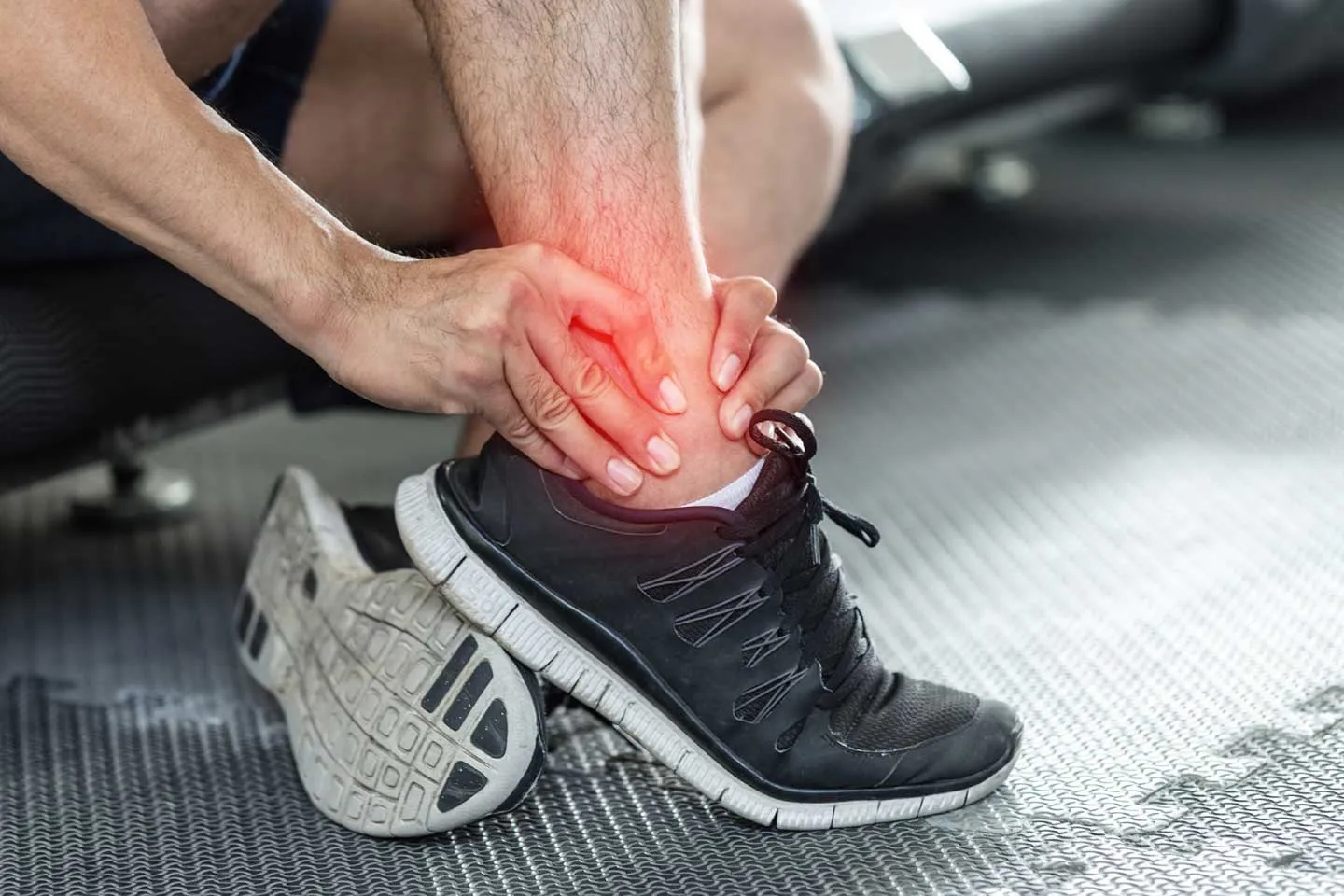
Foot and ankle conditions, such as sprained ankles or ankle fractures, are common. They are among the most common injuries presenting to emergency departments and GPs across the country.
Most will resolve as expected within normal healing times for bones and ligaments, but some complaints take longer to improve. One cause of this persistent pain is the small joints of the foot. These are often forgotten during rehabilitation after a foot or ankle injury. Treating them can make the difference in that last bit of pain or restriction sometimes felt.
The anatomy of the foot is complex. There are many small bones and joints in the foot, held together by numerous ligaments and surrounding muscles. The main ankle joint is called the talocrural joint. This is the joint at the end of the shin bones (tibia and fibula) where they meet the first foot bone (talus). Most foot movement comes from this joint, and most injuries involve the ligaments that support it. If we move further into the foot, down from the talocrural (ankle) joint, we come to the small joints of the talonavicular and calcaneocuboid. There is naturally much less movement at these two joints than at the talocrural joint.
Importantly, though, there should be some movement at these joints during walking and weight-bearing to allow for normal movement. The talonavicular joint is more towards the inside of the foot. There is some up-and-down movement and rotation in this joint when we put weight on our foot during walking. This movement varies from person to person and from left foot to right foot, but your therapist can get a sense of the expected amount of movement. The calcaneocuboid joint is between the calcaneum bone and the cuboid bone. It is more toward the outer side of your midfoot. This joint has minimal natural movement but does allow a small amount during walking.
These joints have developed and are essential because they provide a flexible platform that allows us to move and walk. Our feet are impressively designed, with many small, interacting joints, muscles, and ligaments, allowing us to be both flexible and strong. These two joints, the talonavicular and calcaneocuboid, play an essential role in the arches that form naturally in our feet as we bear weight.
A good example of the contribution these small joints can make to recovery is presented here:
Mr X, a 31-year-old male, sprained his ankle badly while playing football, resulting in a minor fracture and significant swelling. He spent some time in a boot to help the bone heal, and, when he took it off, he found he had a stiff, sore ankle.
He was given some exercises to do, and found that, in general, his ankle started to loosen up nicely. As he was able to resume walking and things were improving, he decided not to attend Physiotherapy.
Eight weeks later, Mr X found that although he had improved, he still had problems walking up hills or after being on his feet for long periods. Mr X was assessed by a physiotherapist, who found that his main talocrural (ankle) joint was moving well, but that his talonavicular joint had less play and movement than his uninjured foot and that the up-and-down movement was slightly restricted. The joint was mobilized, and Mr X was shown how to perform these mobilizations at home. He worked on these for several weeks and noted an improvement in his uphill walking.
In summary, these small midfoot joints do not account for a large percentage of foot movement during walking, but they contribute. They also contribute to the arches that form a flexible yet strong platform on which we can stand and move.
This provides us with incredible mobility and the ability to walk upright. After injury, it is essential to pay attention not only to the obvious leading movers at the talocrural (ankle) and subtalar (hindfoot) joints but also to the midfoot joints of the talonavicular and calcaneocuboid joints. Their role is smaller, but they work as a combined unit, so if problems persist, seek advice on whether they need to be assessed.
Schedule Your Visit
Don’t wait to feel better. Book your consultation with Physio Therapy Singapore Collective today and let us help you move freely and live pain-free.


Mon–Fri: 7 a.m.– 9 p.m.
Sat & Sun: 8 a.m.– 8 p.m.


We offer expert physiotherapy, rehabilitation, and wellness services across Singapore.



2026 © Physiotherapy Singapore Collective. All rights reserved. | Privacy Policy | Digital Marketing by Remedo
- Aljunied |
- Ang Mo Kio |
- Balestier |
- Bartley |
- Bedok |
- Bugis |
- Bukit Batok |
- Bukit Timah |
- Buona Vista |
- Chinatown |
- Choa Chu Kang |
- Clementi |
- East Coast |
- Geylang |
- Hougang |
- Jalan Kayu |
- Jurong |
- Kallang |
- Kembangan |
- Macpherson |
- Mandai |
- Marina Bay |
- Marine Parade |
- Novena |
- Orchard Road |
- Pasir Panjang |
- Pasir Ris |
- Paya Lebar |
- Potong Pasir |
- Punggol |
- Queenstown |
- Raffles Place |
- Seletar |
- Sentosa |
- Serangoon |
- Tai Seng |
- Tampines |
- Tanjong Pagar |
- Telok Blangah |
- Tiong Bahru |
- Toa Payoh |
- Woodlands |
- Yishun
- Aljunied |
- Ang Mo Kio |
- Balestier |
- Bartley |
- Bedok |
- Bugis |
- Bukit Batok |
- Bukit Timah |
- Buona Vista |
- Chinatown |
- Choa Chu Kang |
- Clementi |
- East Coast |
- Geylang |
- Hougang |
- Jalan Kayu |
- Jurong |
- Kallang |
- Kembangan |
- Macpherson |
- Mandai |
- Marina Bay |
- Marine Parade |
- Novena |
- Orchard Road |
- Pasir Panjang |
- Pasir Ris |
- Paya Lebar |
- Potong Pasir |
- Punggol |
- Queenstown |
- Raffles Place |
- Seletar |
- Sentosa |
- Serangoon |
- Tai Seng |
- Tampines |
- Tanjong Pagar |
- Telok Blangah |
- Tiong Bahru |
- Toa Payoh |
- Woodlands |
- Yishun