What to Avoid When Exercising After Pregnancy
1) Exercises that can cause a diastasis recti to worsen
If you have a diastasis recti, exercises such as sit-ups, crunches, planks, and bicycles can actually worsen your condition. If you are unsure whether you have a diastasis recti (read here for more information), it is definitely worth seeing a physiotherapist to have it checked. If you have one, they can teach you safe exercises.
2) HIIT (High Intensity) Exercises too Early
After birth, your body will be affected by common challenges such as sleep deprivation, loss of strength and fitness, anxiety and stress and hormonal changes. All of these factors can make you more susceptible to injury; therefore, it's best to start with light exercise and only progress on to high intensity when your body is ready.
3) Sporadic Exercising
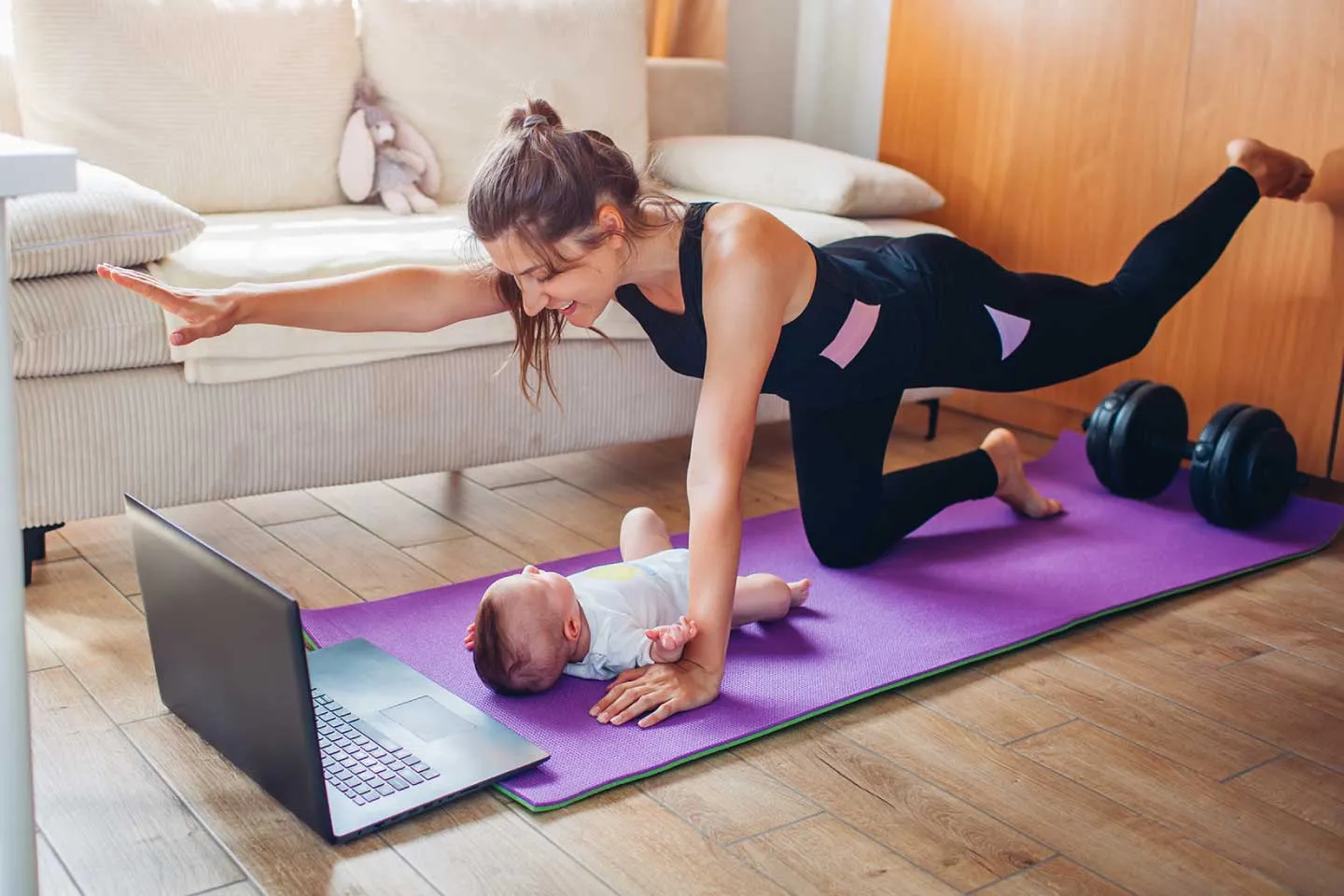
As hard as it is to have a baby, it's essential to find time to exercise. Aim to do shorter exercise sessions regularly rather than one longer session when you have time. This will show results more quickly and help avoid injury. Bex Aldridge can help you find time by leading exercise sessions with you and your baby, helping you lose weight and tone up while having fun with your baby.
4) Carrying on When Not Able to Control Urination While Exercising
This is not ideal for obvious reasons, and your pelvic floor muscles are not yet strong enough to control your bladder during exercise. Best at this point to seek help from one of our physios who can help you strengthen the pelvic floor and teach you exercises to lose weight and tone at the same time.
5) Spending a Lot of Time Stretching
Beware that there is more of the hormone relaxin and elastin in your body during pregnancy, and they stay present in your body for months afterwards. This means you are more flexible than usual, and exercises such as yoga and extensive stretching may increase your risk of injury. Exercise such as pilates and strengthening work will be a better option for the months following delivery.
6) Repeating the Same Exercises Again and Again
Your body needs to be challenged to gain results. The most effective program will be varied and include exercises that speed up metabolism, burn fat, increase fitness, and tone up. Our FITMAMA exercise programmes are designed to offer a variety of exercises that keep sessions motivating and engaging, helping you achieve the results you are looking for.
7) Getting on That Treadmill too Quickly
It is best to have a review with a physio before returning to running. As an exercise, it places significant strain on your core and pelvic muscles, and they may not fully recover until 4-6 months after pregnancy. Starting too soon may cause issues such as incontinence and prolapse to develop or for a diastasis recti to worsen if you have one.
8) Exercising with the Baby Carrier Incorrectly
Ideally, babies should have the baby carrier below chin height before they are faced outwards; otherwise, keep them facing in. It is worth having a physio or a baby carrier expert check how you are wearing it to ensure you are not putting any unwanted strain on your neck or back. Baby carriers with hip support are better at preventing low back strain, especially as the baby gains weight and size.
We are physios/personal trainers excited about helping any mom get back to being fit and toned again, but safely.
Schedule Your Visit
Don’t wait to feel better. Book your consultation with Physio Therapy Singapore Collective today and let us help you move freely and live pain-free.


Mon–Fri: 7 a.m.– 9 p.m.
Sat & Sun: 8 a.m.– 8 p.m.

We offer expert physiotherapy, rehabilitation, and wellness services across Singapore.



2026 © Physiotherapy Singapore Collective. All rights reserved. | Privacy Policy | Digital Marketing by Remedo
- Aljunied |
- Ang Mo Kio |
- Balestier |
- Bartley |
- Bedok |
- Bugis |
- Bukit Batok |
- Bukit Timah |
- Buona Vista |
- Chinatown |
- Choa Chu Kang |
- Clementi |
- East Coast |
- Geylang |
- Hougang |
- Jalan Kayu |
- Jurong |
- Kallang |
- Kembangan |
- Macpherson |
- Mandai |
- Marina Bay |
- Marine Parade |
- Novena |
- Orchard Road |
- Pasir Panjang |
- Pasir Ris |
- Paya Lebar |
- Potong Pasir |
- Punggol |
- Queenstown |
- Raffles Place |
- Seletar |
- Sentosa |
- Serangoon |
- Tai Seng |
- Tampines |
- Tanjong Pagar |
- Telok Blangah |
- Tiong Bahru |
- Toa Payoh |
- Woodlands |
- Yishun
- Aljunied |
- Ang Mo Kio |
- Balestier |
- Bartley |
- Bedok |
- Bugis |
- Bukit Batok |
- Bukit Timah |
- Buona Vista |
- Chinatown |
- Choa Chu Kang |
- Clementi |
- East Coast |
- Geylang |
- Hougang |
- Jalan Kayu |
- Jurong |
- Kallang |
- Kembangan |
- Macpherson |
- Mandai |
- Marina Bay |
- Marine Parade |
- Novena |
- Orchard Road |
- Pasir Panjang |
- Pasir Ris |
- Paya Lebar |
- Potong Pasir |
- Punggol |
- Queenstown |
- Raffles Place |
- Seletar |
- Sentosa |
- Serangoon |
- Tai Seng |
- Tampines |
- Tanjong Pagar |
- Telok Blangah |
- Tiong Bahru |
- Toa Payoh |
- Woodlands |
- Yishun