
What is Pubic Symphysis Pain?
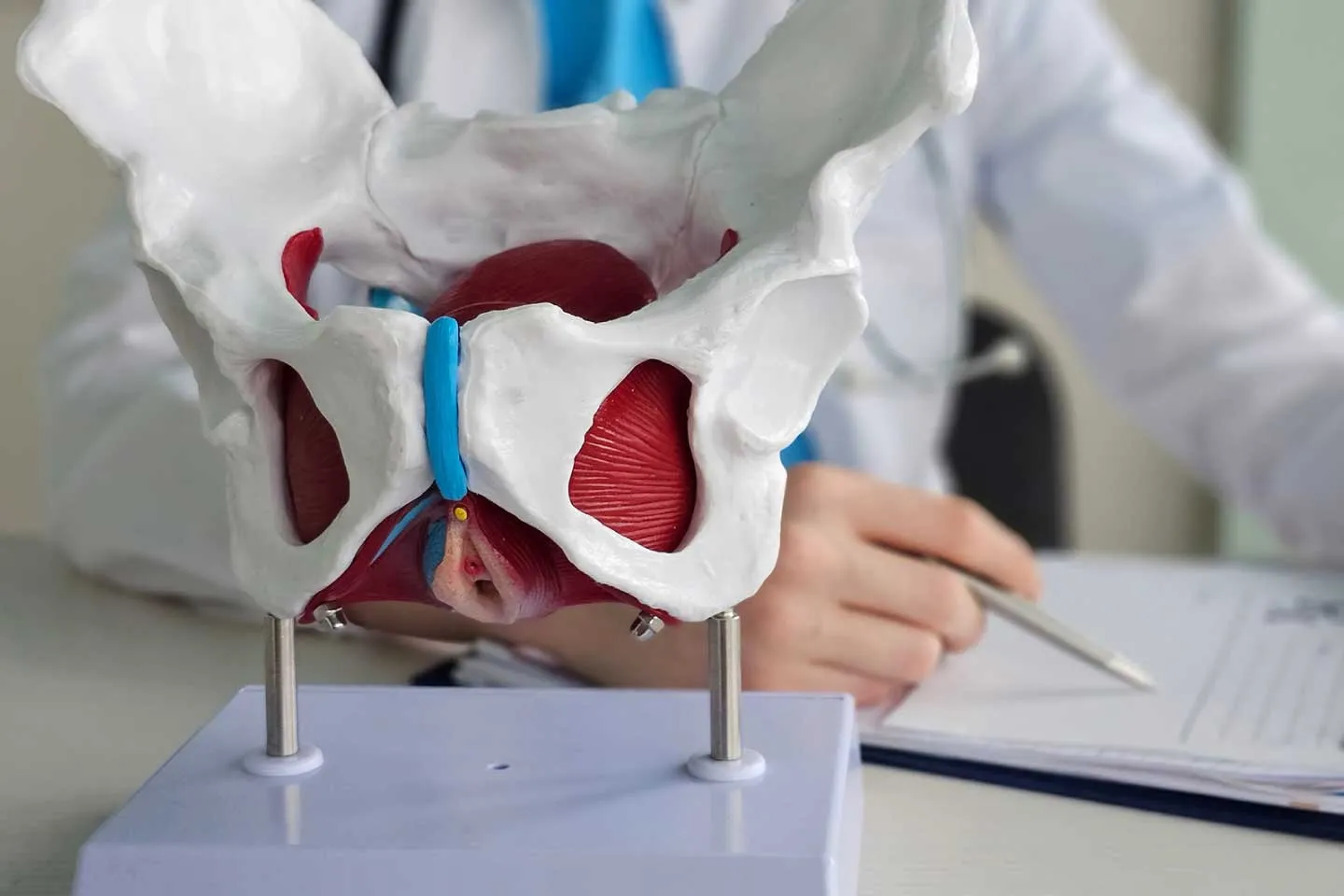
The pelvis is made up of three bones. This circle of bones is shaped like a bowl with a hole, and it has three joints. The joint at the front, which joins the front pubic bones, is known as the pubic symphysis (PS). It is the most stable joint in the pelvis.
Where Do You Feel the Pain from the Pubic Symphysis?
Pain around the pelvis can be confusing, as there are many umbrella terms and different names that can refer to several areas of the pelvis from which the pain might be arising.
Pain from the pubic symphysis is generally felt in the front part of the pelvis, right at the joint, just above the genitals. It can radiate outwards into the hips (on one or both sides), into the groin, and/or genitals.
However, it can be described as a group of symptoms known as Symphysis Pubis Dysfunction, which also includes pain originating from the joints at the back of the pelvis, specifically the Sacroiliac Joints (SIJ). It can also be referred to as pelvic girdle pain or symphysis pain syndrome, among other names.
Why Does the Pain Happen?
Your hormones change a great deal throughout the course of your pregnancy, as well as after it. During pregnancy, the pubic symphysis joint softens. It needs to be more flexible to allow the baby to pass through during birth.
As the ligaments soften, they provide passive support, so some muscles and tendons increase their workload to compensate.
As hormones affect the whole nervous system, it becomes sensitised, which can lead to an increased pain response to normal movement.
What Can You Do about the Pain?
The key to successfully managing Pubic Symphysis Pain is to avoid activities that make the pain worse while building strength around your pelvis.
- When moving from one position to another, keep your knees together
- Reduce your step size when walking
- Learn techniques of getting in and out of a car – see our video below
- Sexual intercourse: Try to keep your legs as close together as possible
- Learn techniques of getting down and up from a mat – see our video below
- Sometimes a pillow between your legs can help when sleeping
- When going up and down stairs, aim to do one step at a time
How Can Physiotherapy Help My Pubic Symphysis Pain?
First, your physio will take a thorough history from you and perform a complete examination of your posture, strength, flexibility, and pelvic floor core strength.
- Hands-on treatment is highly effective at relieving pain.
- Different modalities like hot and cold treatments may be prescribed.
- Various taping techniques or support belts may be recommended.
Why Is It Not Advised to Not Just Follow Exercises off the Internet?
Exercise can be invaluable in strengthening your pelvic muscles, but a professional assessment is essential.
An Important Note
Any pelvic girdle pain which initiates during pregnancy tends not to recover spontaneously.
How Physio Therapy Singapore Can Help You?
In Singapore and the UK, our Women’s Health Specialist physiotherapists can visit you at home or at our clinic.
We hope this blog has helped you.
Written By
Laura O’Byrne
Women's Health Specialist Physiotherapist
Schedule Your Visit
Don’t wait to feel better. Book your consultation with Physio Therapy Singapore Collective today and let us help you move freely and live pain-free.


Mon–Fri: 7 a.m.– 9 p.m.
Sat & Sun: 8 a.m.– 8 p.m.


We offer expert physiotherapy, rehabilitation, and wellness services across Singapore.



2026 © Physiotherapy Singapore Collective. All rights reserved. | Privacy Policy | Digital Marketing by Remedo
- Aljunied |
- Ang Mo Kio |
- Balestier |
- Bartley |
- Bedok |
- Bugis |
- Bukit Batok |
- Bukit Timah |
- Buona Vista |
- Chinatown |
- Choa Chu Kang |
- Clementi |
- East Coast |
- Geylang |
- Hougang |
- Jalan Kayu |
- Jurong |
- Kallang |
- Kembangan |
- Macpherson |
- Mandai |
- Marina Bay |
- Marine Parade |
- Novena |
- Orchard Road |
- Pasir Panjang |
- Pasir Ris |
- Paya Lebar |
- Potong Pasir |
- Punggol |
- Queenstown |
- Raffles Place |
- Seletar |
- Sentosa |
- Serangoon |
- Tai Seng |
- Tampines |
- Tanjong Pagar |
- Telok Blangah |
- Tiong Bahru |
- Toa Payoh |
- Woodlands |
- Yishun
- Aljunied |
- Ang Mo Kio |
- Balestier |
- Bartley |
- Bedok |
- Bugis |
- Bukit Batok |
- Bukit Timah |
- Buona Vista |
- Chinatown |
- Choa Chu Kang |
- Clementi |
- East Coast |
- Geylang |
- Hougang |
- Jalan Kayu |
- Jurong |
- Kallang |
- Kembangan |
- Macpherson |
- Mandai |
- Marina Bay |
- Marine Parade |
- Novena |
- Orchard Road |
- Pasir Panjang |
- Pasir Ris |
- Paya Lebar |
- Potong Pasir |
- Punggol |
- Queenstown |
- Raffles Place |
- Seletar |
- Sentosa |
- Serangoon |
- Tai Seng |
- Tampines |
- Tanjong Pagar |
- Telok Blangah |
- Tiong Bahru |
- Toa Payoh |
- Woodlands |
- Yishun