
What Causes a Sprained Ankle?
5 Risk Factors Can Cause the Problem to Persist:
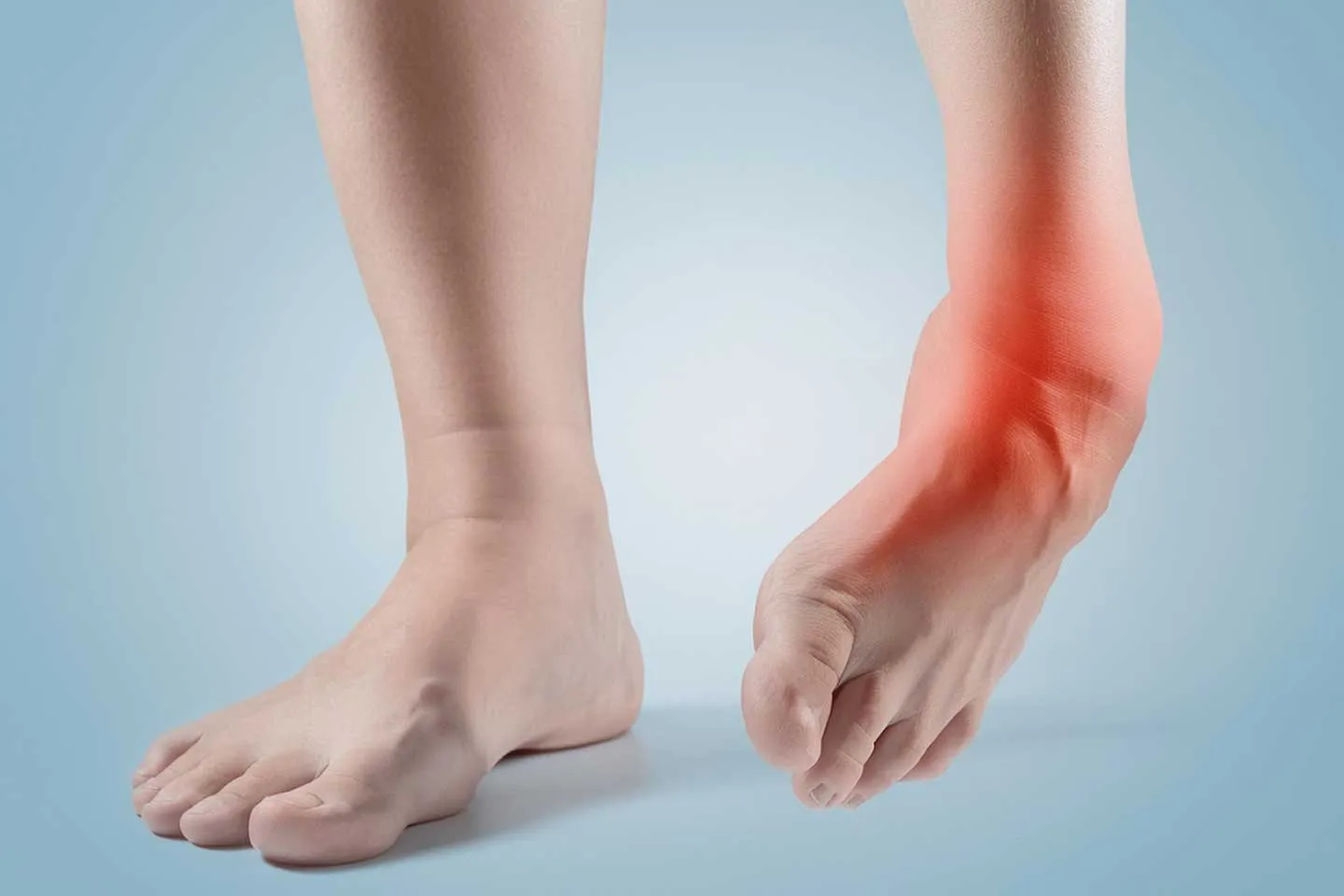
Ankle sprains are very common. They are the number one injury presenting to most emergency departments. Most of us will have experienced an ankle sprain at some point in our lives. This acute injury commonly affects the ligaments on the outside of the ankle, which are overstretched when the ankle rolls. Sometimes other tissues around the ankle can also be injured. If you are fit and healthy, then the tissues will heal within 6-8 weeks. New tissue is formed and deposited at the site of injury, forming a scar. Pain is a common symptom of an ankle sprain because the injured soft tissue and the healing chemicals present during the repair process are painful. This is a useful pain, as it reminds us to listen to our bodies as they repair and not to overdo it. As you heal, this pain will usually reduce at the same time.
Sometimes pain will last longer than 6-8 weeks after the injury. There are many reasons for this. A complete assessment to rule out bony injuries is essential, as it can often mean a longer recovery time. There is a wealth of research looking into the risk factors that leave a person vulnerable to persistent problems after an ankle sprain. Here, we discuss a few factors that can influence symptoms and why it is essential to address them early.
What Factors Can Influence Symptoms, and How Can They Be Addressed?
Here we discuss a few of the factors that can influence symptoms and why it is essential to address these things early on:
1. Multiple Ligaments – Have a clear idea of the number of ligaments damaged: it is not as simple as ‘one size fits all’ with ankle sprains. There are multiple ligaments around the ankle, and these ligaments can be sprained to varying degrees. There are many tests available to help medical professionals assess the extent of ligament injury. These tests have variable reliability (sometimes we can't fully trust the answer they give us). Testing the ligaments thoroughly and individually will provide a clear picture of the extent of physical injury and, therefore, a realistic estimate of how quickly you should expect to recover. You must follow that advice and avoid pushing too early, as the risk of re-injuring an ankle ligament is high after the first sprain. Limiting the risk of re-injuring your ankle in the early days of recovery is vital.
2. Positioning – The position your foot adopts both before you even injure your ankle, the natural anatomy of your foot, but also the position it chooses to adopt after the injury is essential to how you may recover.
Research has shown that people who bear more weight on the outside edge of their foot are at greater risk of injuring their ankle ligaments when rolling their ankle.
This is because you are already closer to the limit at which the ligament stretches, so rolling the ankle outwards is easier. It also seems that once a ligament is stretched, the built-in warning system of messages that pass from the ligament to the brain, telling the body where the foot is and how it is positioned, is altered. This might be because the ligament has been stretched and is now longer than before.
This means that when we move and test the ligament during everyday movements, it is harder for the signals to be stimulated, so we get fewer or less accurate signals telling us where the ankle and foot are on the floor. This means we are more vulnerable to re-injury. Learning to position your foot accurately and practising these movements are vital for full recovery.
3. Strengthening – Commonly, after injury, patients are given a set of exercises to do that might include strengthening the ankle muscles to support the ligaments around the ankle, like a corset or brace that we might wear. This is good news. However, often either patients start to improve and then forget the exercises, or they are worried about how much to do, or their therapist looking after them simply doesn’t progress enough, and re-injury can occur. It is essential that strengthening occurs in the movements where the ankle is most vulnerable. This typically means into the turned-in position of the foot where the injury likely occurred. This is important to ensure that if the ankle goes near this movement again, it can bring itself back ‘from the edge’ so to speak.
This is particularly important if, as we mentioned in point two, the ankle ligaments are a little floppier and cannot give the warning that too much of this movement has occurred. Making sure you progress to higher levels in your exercises will help with this factor.
4. Stiffening – Often, after this type of injury, the ankle will actually stiffen up as a protective response to the injury and to try to prevent further problems. This is also often due to the pain and swelling involved with the healing process. This is normal in the short term, but it must be addressed as you heal to allow you to use the ankle fully and recover. Getting someone to mobilise the ankle, or teaching you how to do it yourself, is helpful. It might seem that stiffening up sounds like a good idea to prevent future sprains, but this is a false economy, as we need this normal movement to do the things we do, like walk up and down stairs and run or squat.
5. Non-Compliance – Research has looked at why some ankle complaints don’t get better as they should. The significant risk factor identified is non-compliance with the recommended rehabilitation. It might seem obvious, but if you avoid normal movement, don’t get rid of stiffness, fail to return your strength to normal, and stop exercising early, you risk the condition taking longer to recover. So get in there early and work hard to recover your ankle as it should; it's worth it to prevent future problems and to get back to your activity.
Leanne Plenge
Specialist MSK Physiotherapist
Physio Comes to You Ltd
Schedule Your Visit
Don’t wait to feel better. Book your consultation with Physio Therapy Singapore Collective today and let us help you move freely and live pain-free.


Mon–Fri: 7 a.m.– 9 p.m.
Sat & Sun: 8 a.m.– 8 p.m.


We offer expert physiotherapy, rehabilitation, and wellness services across Singapore.



2026 © Physiotherapy Singapore Collective. All rights reserved. | Privacy Policy | Digital Marketing by Remedo
- Aljunied |
- Ang Mo Kio |
- Balestier |
- Bartley |
- Bedok |
- Bugis |
- Bukit Batok |
- Bukit Timah |
- Buona Vista |
- Chinatown |
- Choa Chu Kang |
- Clementi |
- East Coast |
- Geylang |
- Hougang |
- Jalan Kayu |
- Jurong |
- Kallang |
- Kembangan |
- Macpherson |
- Mandai |
- Marina Bay |
- Marine Parade |
- Novena |
- Orchard Road |
- Pasir Panjang |
- Pasir Ris |
- Paya Lebar |
- Potong Pasir |
- Punggol |
- Queenstown |
- Raffles Place |
- Seletar |
- Sentosa |
- Serangoon |
- Tai Seng |
- Tampines |
- Tanjong Pagar |
- Telok Blangah |
- Tiong Bahru |
- Toa Payoh |
- Woodlands |
- Yishun
- Aljunied |
- Ang Mo Kio |
- Balestier |
- Bartley |
- Bedok |
- Bugis |
- Bukit Batok |
- Bukit Timah |
- Buona Vista |
- Chinatown |
- Choa Chu Kang |
- Clementi |
- East Coast |
- Geylang |
- Hougang |
- Jalan Kayu |
- Jurong |
- Kallang |
- Kembangan |
- Macpherson |
- Mandai |
- Marina Bay |
- Marine Parade |
- Novena |
- Orchard Road |
- Pasir Panjang |
- Pasir Ris |
- Paya Lebar |
- Potong Pasir |
- Punggol |
- Queenstown |
- Raffles Place |
- Seletar |
- Sentosa |
- Serangoon |
- Tai Seng |
- Tampines |
- Tanjong Pagar |
- Telok Blangah |
- Tiong Bahru |
- Toa Payoh |
- Woodlands |
- Yishun