
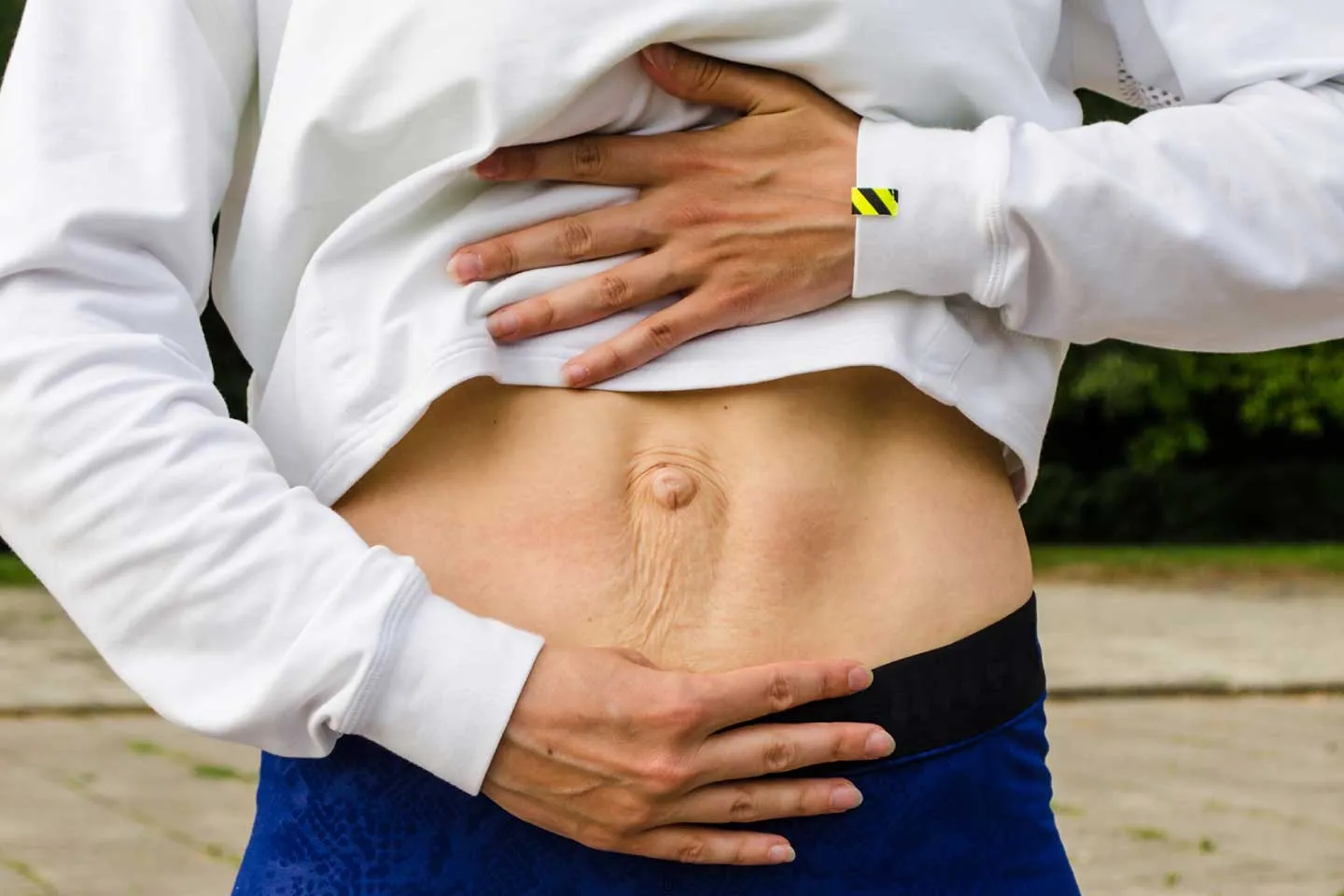
What Is a Diastasis Recti?
When you are pregnant, the tummy expands to accommodate the growing fetus. In 76% of women, the rectus abdominis muscles (think 6-pack) split and move apart along the tummy line, leaving a thin layer of connective tissue holding them together to accommodate the extra intra-abdominal pressure during pregnancy. This is called Diastasis Recti.
Once the baby is born, the gap reduces, but in approximately 30% of women, it remains. Often, doctors do not talk about this, and mothers usually have no idea that their symptoms, such as those described below, can be due to this. It is recommended to see a physiotherapist if a DRAM is suspected, as if it is not corrected, it can lead to several problems, including:
- low back pain
- doming protruding belly – ‘mummy tummy’ or ‘paunch’
- leakage of the bladder
- weak pelvic floor muscles
- constipation
- poor posture
The ‘Mummy Tummy’ or ‘Paunch’
When mums have this stubborn mummy tummy that remains after pregnancy, they often just diet or think regular boot camps or other gym classes will get rid of it. In fact, it is the opposite: regular exercises such as planks and abdominal crunches will make it worse. The only way to get rid of this tummy is to do a specific programme of exercises taught by an experienced professional in treating Diastasis Recti.
Which Mothers Are More Susceptible?
Having a Diastasis Recti does happen more commonly in mothers who are over 35, have had multiple babies, twins, exercised with bad form and are overweight.
How Do I Know if I Have DRAM?
You can perform a simple test on yourself to see if you have DRAM.
A gap of 1-2cm is considered normal, but if any larger, we strongly recommend that a physiotherapist experienced in treating DRAM see you. Due to the uterus needing time to reduce in size after birth, it can be 6 weeks before the test provides a definite result of whether you have a diastasis recti. Still, it is essential to start the exercises as soon as possible after the birth.
Enter Your Email Here to Receive Our Free Video on Assessing for Diastasis Recti Yourself.
What Can Be Done?
It is essential to have a physiotherapist set you specific exercises to help correct the DRAM. The usual tummy exercises, such as abdominal curls and planks, actually make it worse. The exercises the physiotherapist will set you will work the core muscles, such as the transversus abdominis and the pelvic floor, which will help the DRAM correct and reduce your ‘mummy tummy’. They can also apply tape to your tummy to help create the effect of these muscles as a temporary effect while you build up the muscle strength yourself.
Is It an Issue After Caesarean Also?
The surgeon will cut through the abdominal muscles and fascia when performing a caesarean, and then usually stitch the fascia and abdominal muscles back together when closing up after removing the baby. However, the same treatment for DRAM is recommended for mothers who have had a caesarean section to help the connective tissues heal in the best way.
How Long Will It Take to Correct?
It is common to see a difference after 3 weeks of doing the exercises, but full correction usually takes a few months to one year.
Schedule Your Visit
Don’t wait to feel better. Book your consultation with Physio Therapy Singapore Collective today and let us help you move freely and live pain-free.


Mon–Fri: 7 a.m.– 9 p.m.
Sat & Sun: 8 a.m.– 8 p.m.


We offer expert physiotherapy, rehabilitation, and wellness services across Singapore.



2026 © Physiotherapy Singapore Collective. All rights reserved. | Privacy Policy | Digital Marketing by Remedo
- Aljunied |
- Ang Mo Kio |
- Balestier |
- Bartley |
- Bedok |
- Bugis |
- Bukit Batok |
- Bukit Timah |
- Buona Vista |
- Chinatown |
- Choa Chu Kang |
- Clementi |
- East Coast |
- Geylang |
- Hougang |
- Jalan Kayu |
- Jurong |
- Kallang |
- Kembangan |
- Macpherson |
- Mandai |
- Marina Bay |
- Marine Parade |
- Novena |
- Orchard Road |
- Pasir Panjang |
- Pasir Ris |
- Paya Lebar |
- Potong Pasir |
- Punggol |
- Queenstown |
- Raffles Place |
- Seletar |
- Sentosa |
- Serangoon |
- Tai Seng |
- Tampines |
- Tanjong Pagar |
- Telok Blangah |
- Tiong Bahru |
- Toa Payoh |
- Woodlands |
- Yishun
- Aljunied |
- Ang Mo Kio |
- Balestier |
- Bartley |
- Bedok |
- Bugis |
- Bukit Batok |
- Bukit Timah |
- Buona Vista |
- Chinatown |
- Choa Chu Kang |
- Clementi |
- East Coast |
- Geylang |
- Hougang |
- Jalan Kayu |
- Jurong |
- Kallang |
- Kembangan |
- Macpherson |
- Mandai |
- Marina Bay |
- Marine Parade |
- Novena |
- Orchard Road |
- Pasir Panjang |
- Pasir Ris |
- Paya Lebar |
- Potong Pasir |
- Punggol |
- Queenstown |
- Raffles Place |
- Seletar |
- Sentosa |
- Serangoon |
- Tai Seng |
- Tampines |
- Tanjong Pagar |
- Telok Blangah |
- Tiong Bahru |
- Toa Payoh |
- Woodlands |
- Yishun